
Product and packaging
Describe the goods, pack format, dimensions, sensitivity and handling instructions.
Chemical and agricultural inputs can require careful classification, compatible handling and clear documentation. The product’s characteristics and applicable transport requirements should guide every movement plan.
KSGL Logistics invites chemical and agro-science businesses to share their cargo details, safety instructions, origin, destination and delivery needs. These details help determine whether an enquiry is within scope and what coordination it requires.

For regulated or sensitive cargo, include the relevant classification, safety data, packaging, permits and handling instructions with your enquiry. Requirements are reviewed before any movement is agreed.
Fast-moving consumer goods often combine frequent replenishment with changing order volumes and multiple delivery points. Planning depends on the product, the stock profile and the timing retailers or distributors require.
We can discuss transport, storage and dispatch coordination for FMCG movements. Share expected volumes, destinations, delivery cadence and any product-handling requirements to help frame a realistic service brief.

Seasonal peaks and promotional demand can affect dispatch volumes. Advance notice of expected surges, priority destinations and replenishment windows helps teams prepare a more suitable movement plan.
Online retail movements can involve varied product lines, small order batches and peaks around promotions. A clear flow between inventory, order preparation and carrier hand-off helps keep fulfilment operations organized.
KSGL Logistics can discuss storage, packing, labelling and outbound transport requirements for e-commerce and retail businesses. Let us know your order profile, dispatch locations and any delivery service expectations.

Share the product mix, typical order size, packaging instructions, peak-season calendar and delivery destinations when planning a retail logistics requirement. These inputs help define the handling and dispatch scope.
Technology and telecom shipments may include time-sensitive equipment, multiple delivery sites or special handling instructions. Planning should account for item dimensions, packaging, access conditions and the required delivery sequence.
We welcome enquiries for inbound, inter-site and outbound freight coordination. Provide the route, shipment profile and any installation-site or delivery constraints so the requirements can be reviewed in context.

Manufacturing supply chains move raw materials, components, finished goods and sometimes oversized equipment. Each consignment has its own loading method, site access conditions and delivery sequence to consider.
KSGL Logistics can discuss transport, warehousing, in-plant and ODC requirements with engineering and manufacturing businesses. Share project milestones, cargo dimensions, handling needs and site restrictions to help us assess the brief.
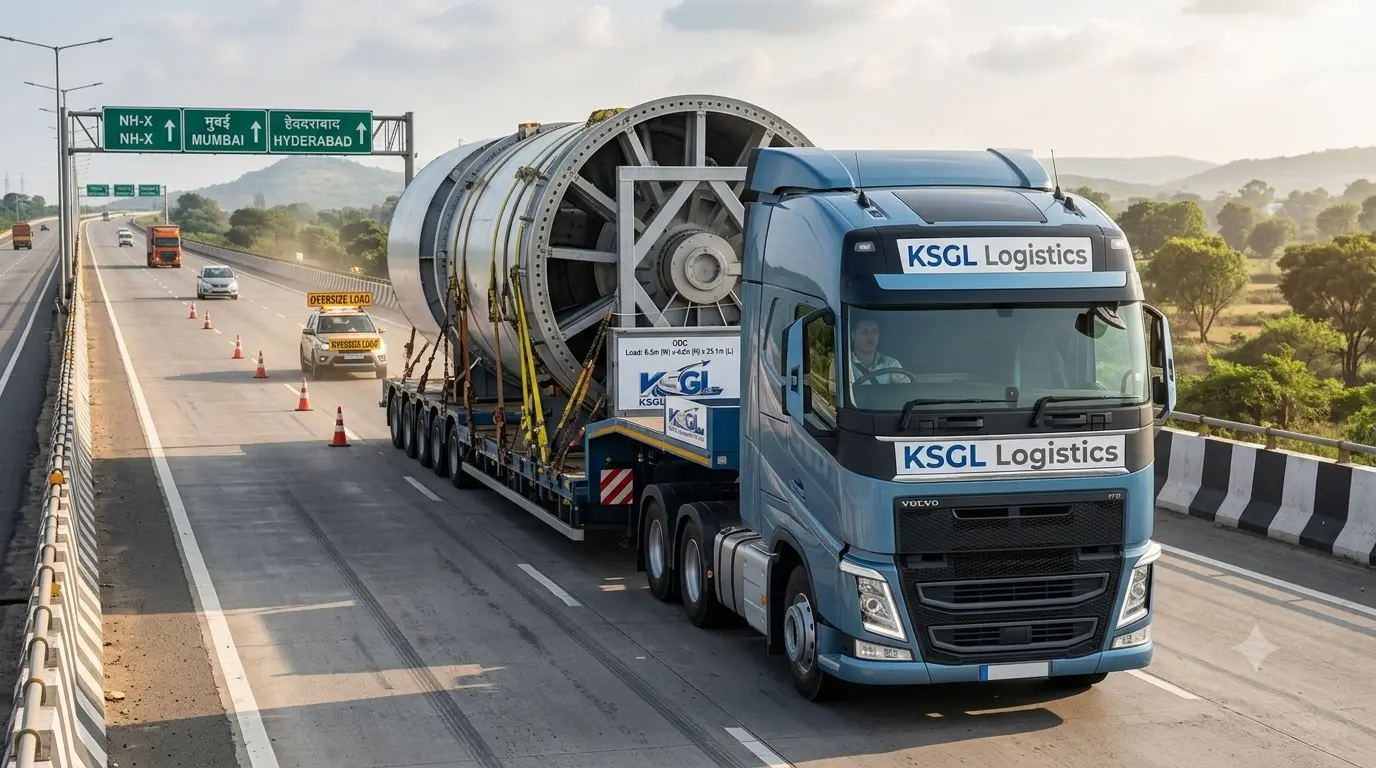
For plant-related or project cargo, early planning allows the parties to review sequence, vehicle access, unloading arrangements and required delivery windows before dispatch.
Planning inputs
Describe the goods, pack format, dimensions, sensitivity and handling instructions.
Tell us whether the requirement is a one-time project, regular replenishment or seasonal flow.
List locations, access conditions, delivery sequence and timing constraints.